

Manufacturing Services
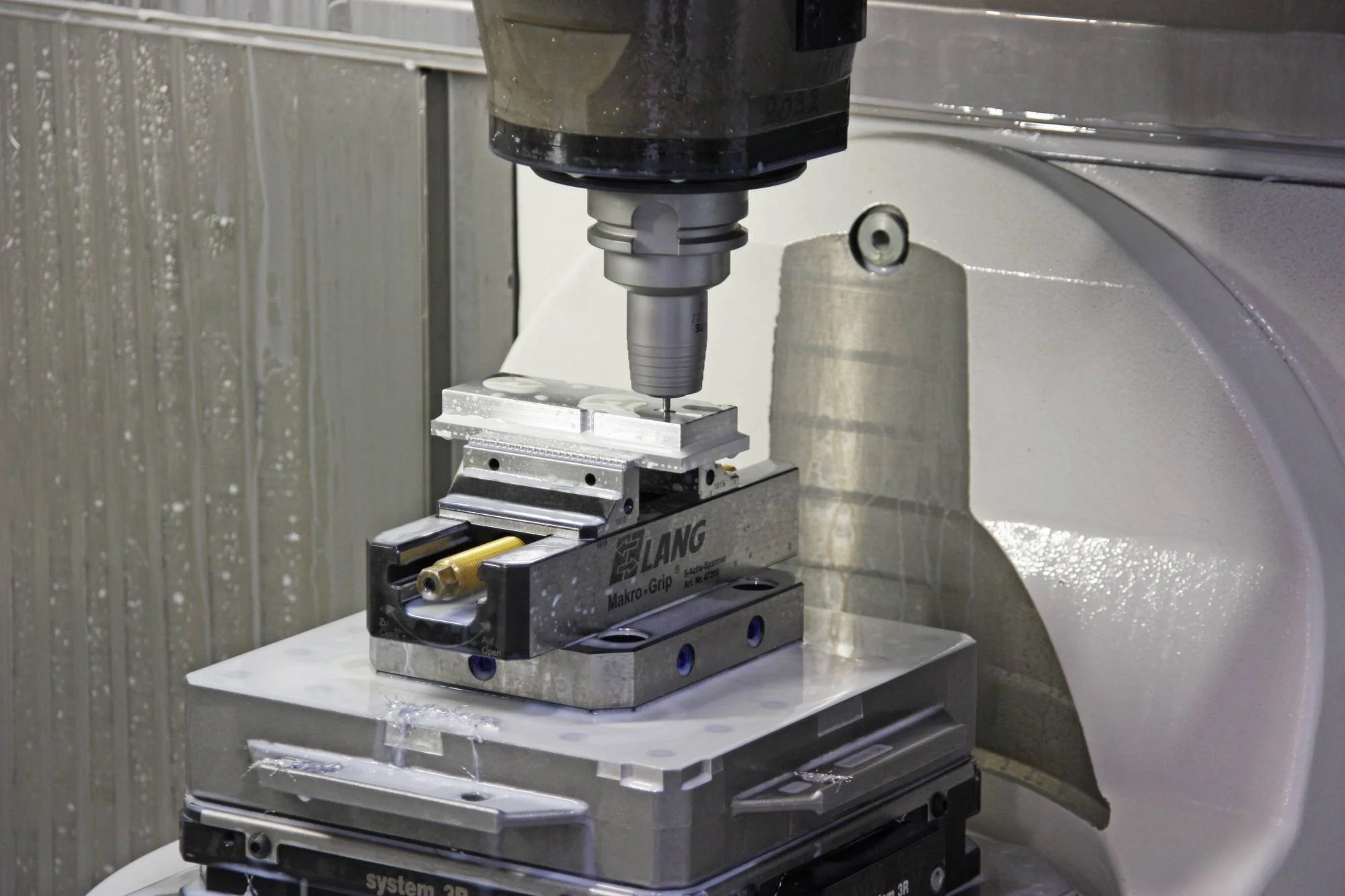
Mikrograin provides precision 5-axis CNC machining services for prototype, process development, and production-stage projects. Our work is built around speed, repeatability, dimensional control, and the practical manufacturing decisions required to turn difficult parts into stable processes.
We support engineering teams that need more than a transactional machine shop: complex geometry, tight tolerances, difficult materials, urgent first articles, and production workflows that need to scale without losing control of quality, cost, or lead time.
Core Capabilities
Mikrograin supports precision machining projects that require more than basic part production. Our work is focused on 5-axis CNC milling, process development, tight-tolerance manufacturing, and practical support for engineering teams moving from prototype approval into repeatable production.
| Capability Area | Mikrograin Focus |
|---|---|
| Machining | 5-axis CNC milling, high-speed machining, prototype machining, first articles, and small-batch production. |
| Project Stage | Prototype development, process development, production support, and prototype-to-production transitions. |
| Materials | Aluminum, stainless steels, titanium, Inconel and other nickel alloys, engineering plastics, and other advanced materials. |
| Geometry | Complex 3D profiles, multi-sided parts, tight positional relationships, and components requiring advanced workholding or toolpath strategy. |
| Tolerances | Tight-tolerance 5-axis machining, including sub-0.001" positional requirements and select critical features down to 0.0001" where the part and process support it.* |
| Inspection | Dimensional inspection, in-process verification, inspection planning, and CMM reporting available when required. |
| Part Size | Machine travels up to X 500 mm, Y 450 mm, Z 550 mm; table capacity up to Ø600 mm and 200 kg.* |
| Lead Time | Fast-turn prototype and first-article work, with target turnaround as short as 2 weeks for qualified projects.* |
*Final capability and lead-time commitments depend on part geometry, material, fixturing, tool clearance, inspection requirements, quantity, and current capacity.
How We Support Projects
Mikrograin supports precision machining projects across three common stages: prototyping, process development, and production. Each stage requires a different level of manufacturing involvement, from rapid communication and practical design review to repeatability studies, inspection planning, and long-term process control.
The goal is not only to make conforming parts, but to help customers make better manufacturing decisions earlier in the product lifecycle.
Prototyping
Mikrograin supports prototype projects through direct, responsive communication by email, phone, Slack, text, or whatever channel allows useful information to move quickly. During early review, we look at the part model, drawing, material, application, tolerance scheme, surface finish requirements, and inspection expectations to identify where the manufacturing strategy may affect cost, lead time, or function.
- Reviewing drawings, models, tolerances, and inspection requirements
- Identifying features that may affect function, sealing, assembly, or test validity
- Recommending practical tradeoffs between speed, cost, fixture strategy, and dimensional control
- Communicating quickly as questions arise during quoting, programming, setup, machining, and inspection
Some prototypes need production-level dimensional control because they will be used in full assembly, sealing surfaces, rotating systems, fuel systems, flight hardware, or other function-critical environments. Others are intended for fit checks, static testing, early design validation, or preliminary performance studies, where certain GD&T callouts, finishes, or inspection requirements may be unnecessary for the first build.
Mikrograin helps customers distinguish between those cases. A prototype for a static fire test, for example, may require critical interfaces and sealing features to be tightly controlled while allowing non-functional exterior geometry to remain less constrained. A mating circular surface may need to be reviewed differently depending on whether the requirement is driven by sealing, alignment, bearing contact, cosmetic finish, or simply drawing convention.
We also consider the tradeoffs that are acceptable at the prototype stage. A quick fixture, extra setup, or less efficient cycle may be the right decision if it protects schedule and allows the customer to test the part sooner. That same approach may not be appropriate for production, but it can be the correct choice when speed, learning, and design validation are the priority.
The objective is to deliver usable parts quickly while helping the customer understand which manufacturing decisions matter now, which can wait, and which may affect future production.
Process Development
Mikrograin approaches process development through the full machining workflow: datum strategy, fixture design, tool selection, cutting parameters, toolpath structure, workholding rigidity, tool access, thermal behavior, inspection planning, and setup documentation. The goal is to identify where variation enters the process and how to control it before the part becomes a recurring production problem.
- Reviewing datum structure, tolerance strategy, and inspection feasibility
- Developing fixture, tooling, and toolpath strategies around repeatability
- Identifying sources of variation from material movement, tool wear, thermal behavior, or setup method
- Documenting process controls that support future production runs
This work often includes reviewing whether the drawing, tolerance scheme, and manufacturing strategy are aligned. A feature may be easy to tolerance on a drawing but difficult to measure consistently, expensive to machine unnecessarily, or sensitive to material movement after roughing. In other cases, a difficult tolerance may be justified because it controls assembly, sealing, alignment, motion, or long-term product performance.
Mikrograin evaluates those tradeoffs directly. A process may need a more stable fixture, a different toolpath strategy, a controlled roughing and finishing sequence, additional stock allowance, in-process probing, secondary inspection, or a change in how features are grouped across setups. The right answer depends on the geometry, material, functional requirements, expected quantity, and cost of failure.
The objective is to move from “we made the part” to “we understand the process.” That understanding is what allows quality, lead time, and cost to become more predictable as the project matures.
Production
Mikrograin approaches production with attention to the details that determine whether a process remains dependable over time: fixture repeatability, setup control, tool life, tool replacement strategy, inspection frequency, material consistency, operator documentation, changeover time, and the relationship between cycle time, quality, and cost.
- Refining setup strategy, fixture repeatability, and changeover control
- Managing tool life, replacement intervals, and process stability over repeated runs
- Defining inspection checkpoints for critical features and recurring lots
- Supporting production decisions that balance cost, throughput, quality, and lead time
A production process must also be honest about tradeoffs. The fastest toolpath is not always the most stable. The most rigid fixture is not always the fastest to build. A tolerance that can be achieved once may still require changes before it can be held across repeated lots. A process that works for ten parts may need different controls before it is ready for one hundred, one thousand, or more.
Mikrograin supports production by reviewing these constraints early and building the process around repeatability rather than improvisation. That may include refining the fixture strategy, separating roughing and finishing operations, controlling tool wear, documenting critical setup steps, defining inspection checkpoints, and identifying which features require the most process attention.
The objective is dependable output: conforming parts, controlled variation, clear communication, and a manufacturing process that can scale without losing control of quality, cost, or lead time.
Ideal Project Fit
Mikrograin is best suited for projects where part quality depends on more than machine capacity alone. Good-fit projects often involve complex geometry, tight tolerances, difficult materials, urgent prototype needs, supplier responsiveness issues, or a clear need to move from first article approval into a repeatable production process.
Complex 5-Axis Geometry
Multi-sided parts, difficult tool access, contoured surfaces, compound angles, and components where setup strategy affects accuracy, finish, or lead time.
Tight Tolerance Requirements
Positional, profile, flatness, surface finish, mating-interface, and datum-sensitive features where tolerance strategy and inspection planning matter.
Fast-Turn Prototypes
Prototype and first-article work with aggressive lead-time pressure, rapid design feedback, or testing schedules that require fast communication.
Prototype-to-Production Transition
Parts moving from early development into repeatable production, where fixture strategy, toolpath decisions, and inspection controls need to mature.
Difficult Materials
Aluminum, stainless steels, titanium, nickel alloys, engineering plastics, and other materials where tool selection, heat control, and process stability affect the result.
Manufacturing Review
Projects where engineering teams benefit from practical feedback on GD&T, feature requirements, surface finish, workholding, and manufacturability.
Inspection Strategy
Components where inspection method, datum selection, critical features, and reporting requirements need to be considered before machining begins.
Supplier Recovery
Existing parts affected by poor communication, long lead times, quality variation, unstable processes, or suppliers unable to support technical requirements.
Not every part needs this level of support.
Mikrograin is not positioned as a commodity supplier for simple parts where lowest unit price is the only requirement. The best fit is work where manufacturing discipline, technical review, communication, and process control materially affect the outcome.
If your project fits this profile, review the RFQ guidance below for the information needed to begin a technical project review.
Ready to Discuss a Project?
Send the drawing, model, material, quantity, inspection requirements, and target lead time. Mikrograin will review the project for technical fit, identify any manufacturing concerns, and respond with the most practical path forward.
What to Send
- CAD model and/or drawing
- Material and required condition
- Quantity and expected future volume
- Critical tolerances, GD&T, and surface finish requirements
- Inspection or reporting requirements
- Target lead time
- Application context, if shareable
What We Review
- Manufacturability and process risk
- Fixture and tool access requirements
- Tolerance feasibility
- Inspection strategy
- Material and lead-time constraints
- Prototype-to-production path
- Overall technical and commercial fit